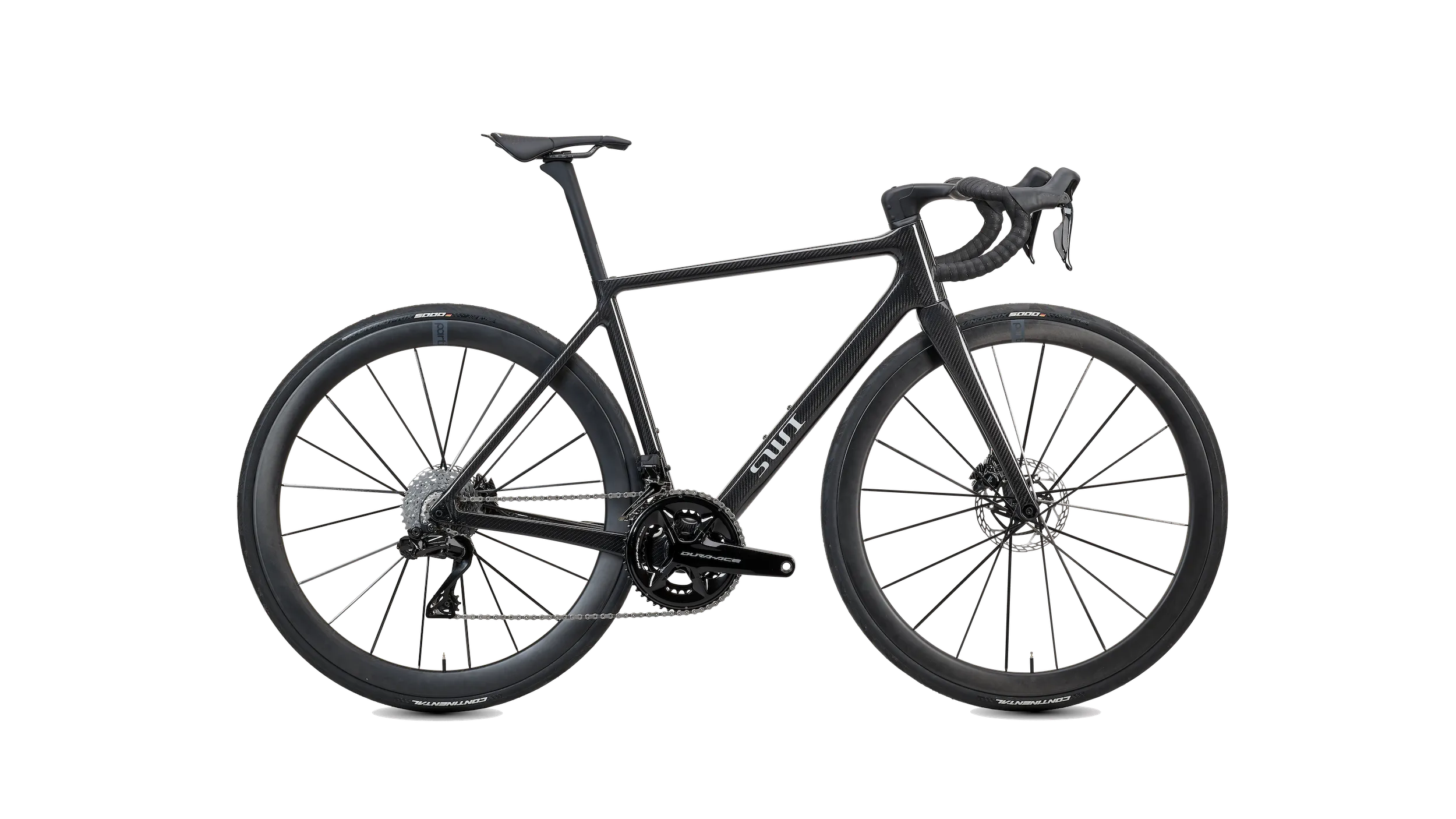


Status
Stage 1 wind-tunnel testing is complete. Next is production tooling and a set of frames built for safety testing, then rider testing on real roads. We are not taking orders yet — register above and you will hear from us before anyone else: when testing concludes, when pricing is set, and when the first build slots open.
Timeline
Seven steps. Two are behind us. Each one has to pass before the next one starts, which is why we have not given you a date for anything except the last of them.
Complete · 2026
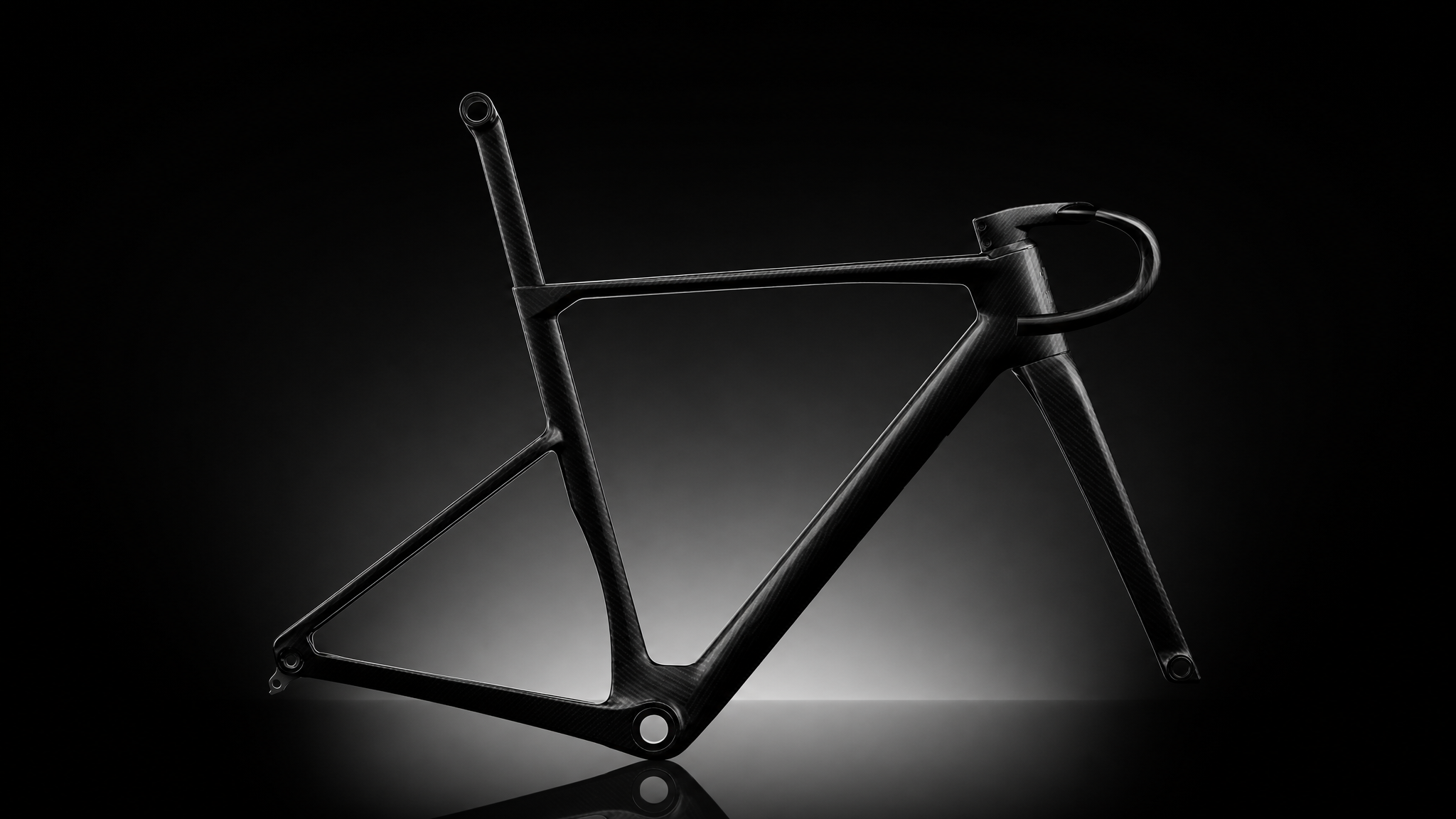
The AER silhouette drawn in Villafranca Padovana, then 3D printed as a full-size frame in size 56 — built to be measured rather than admired.
Complete · September 2026
Silverstone Sports Engineering Hub. The prototype measured against a production Aequus across five yaw angles, with one wheelset fitted to every run so the frame was the only thing that changed.
Next
The mould cut, and the first frames laid up in carbon rather than printed. Surface finish and layup are production from this point on.
Scheduled
Frame and fork through the international standard for road bicycles: fatigue, impact and static load. Nothing goes underneath a rider until it passes.
Scheduled
The moulded frame, with a rider on it, against a known reference bike. This is the session that sets the numbers we publish for the bike as it is actually ridden.
Scheduled
Our ambassadors, on real roads, over months rather than sessions. Handling, comfort and stiffness are not questions a wind tunnel can answer.
January 2027
First build slots open. Everyone on the register hears before anyone else.
Stage 1 · Silverstone Sports Engineering Hub · September 2026
Stage 1 results
The prototype ran against a production Aequus in one session, on one wheelset, at five yaw angles. Averaged across them it measured 11.9% less drag. The average is the least interesting part.
AER prototype, size 56
Aequus production, size 54
Drag against yaw angle, indexed so the Aequus at 0° reads 100. Both frames measured in the same session on the same wheelset at 40 km/h, bike only. Indexed rather than absolute because CdA values are not comparable between facilities or sessions — the only comparison that means anything here is the internal one.
Yaw
0°
5°
10°
15°
20°
Mean
AER
93.2
94.5
94.5
92.1
94.1
93.7
Aequus
100.0
103.4
105.9
106.9
115.6
106.3
Head-on, the AER is 6.8% ahead. By 20° of yaw the gap has widened to 18.6% — not because the AER improves, but because it barely changes at all while the Aequus climbs. Across the whole sweep the AER’s drag moves by 2.6%. The Aequus moves by 10.5%, most of it beyond 15°. The AER’s lowest reading is not head-on: it is at 15° of yaw.
Sustained zero-yaw riding is rare. Crosswind is the ordinary condition, and it is where the difference is largest.
Method
Facility
Silverstone Sports Engineering Hub
Speed
40 km/h
Yaw sweep
0° to 20°, five angles
Sampling
30 s per angle at 100 Hz
Held constant
One wheelset, every run
Test article
Printed prototype, size 56
Stage 1 measured a printed prototype with no rider on it. A rider accounts for most of a bicycle’s total drag, so these figures describe the frame and not the system — they are not a watts-saved claim and should not be read as one. The figures we publish for the bike as it is ridden will come from Stage 2: a moulded frame, with a rider, against a known reference bike.
As Featured In





Tell us a little about yourself. We reply personally within 24 hours — no automated replies.
Something went wrong. Please try again.
Your details are kept private and never shared with third parties.
Your message is with the team in Italy and a confirmation is on its way to your inbox. We reply personally within 24 hours.