

The Approach
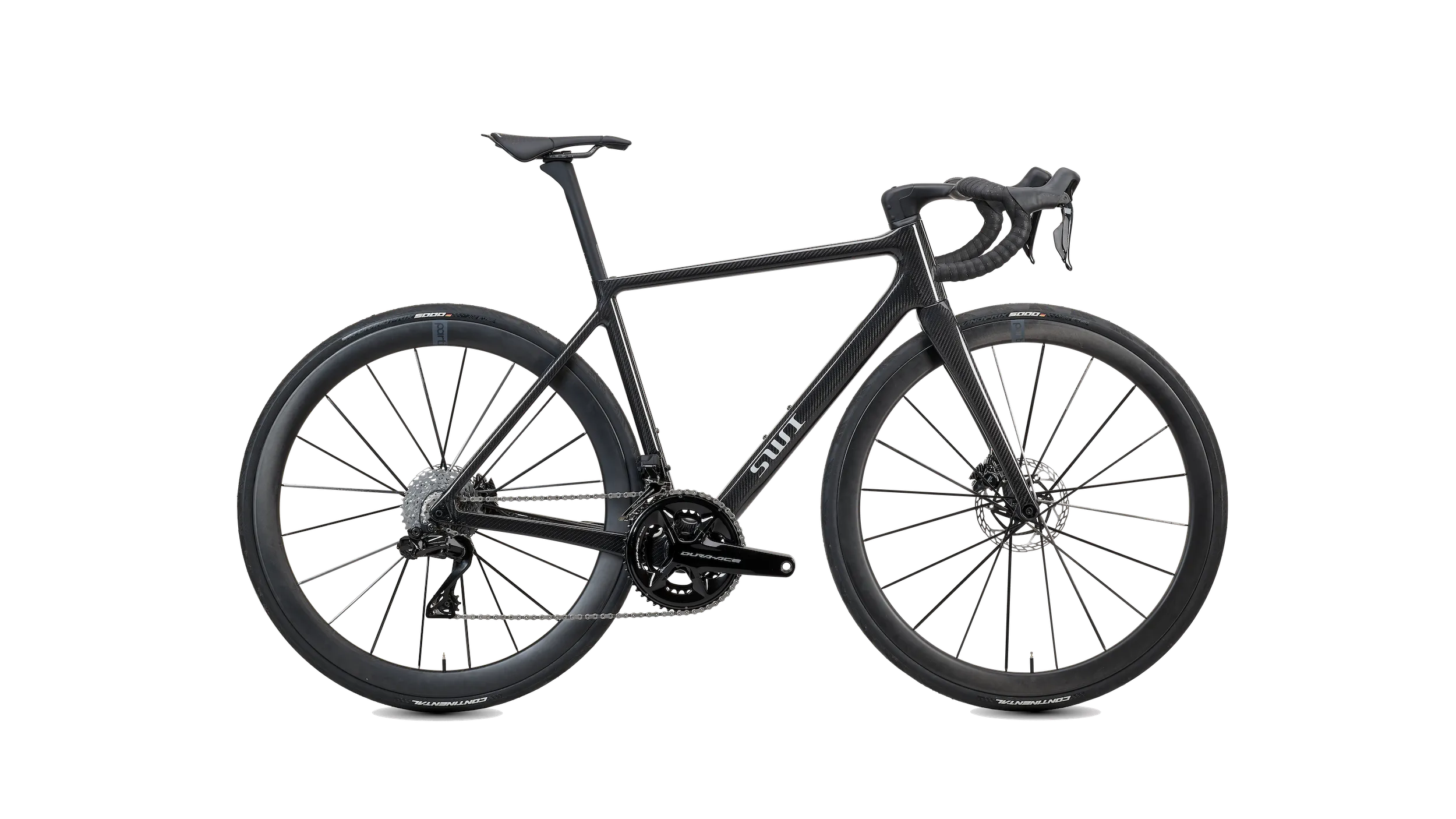
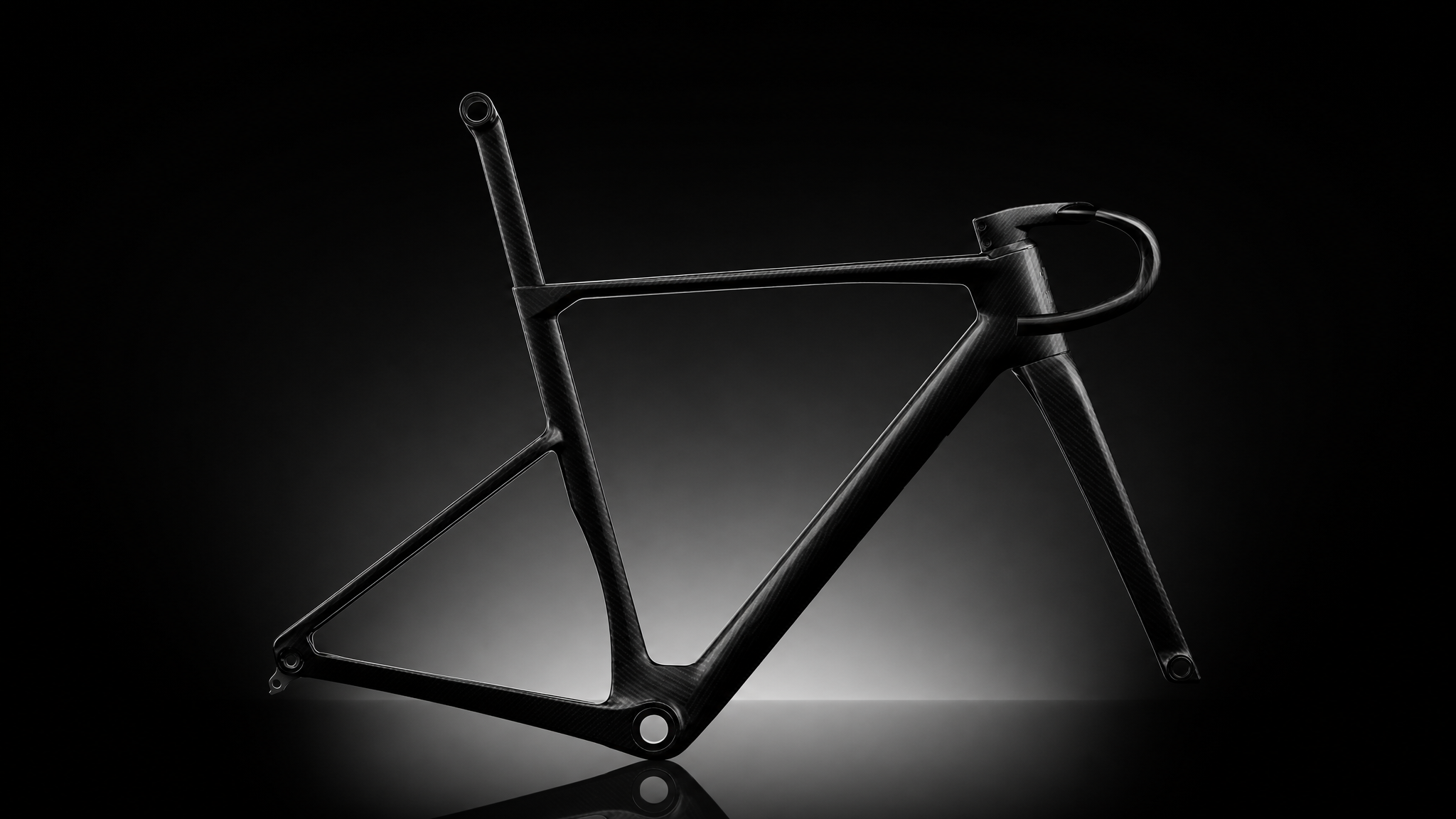
Most carbon frames are built from parts — moulded sections, or pre-made tubes, joined with adhesive. A SWI leaves the mould in one piece. That single decision governs everything downstream: how the carbon is laid, how long it takes, and how few we can build.
Plies as fine as 30 microns, laid at four orientations. Fourteen layers per millimetre, against roughly five for standard carbon fibre.
The woven outer textile — 3,000 filaments per tow in a diagonal weave. Structural, and the surface the brand is recognised by.
One tool per size. The frame is cured inside it as a continuous shell, which is why there is no joint anywhere in the load path.
Fourteen finishes across three families, laid down by hand over the carbon. None of them cost extra.
Watch
The layup, the mould, the finishing — filmed in the workshop at Villafranca Padovana.
More from the workshop — factory visits, build films and ride reports.
Watch on YouTubeThe Process
None of it runs on a line. Each stage waits for a person.
01
Your weight, your power output and the ride feel you want become a layup specification — how many TPT™ layers go into each of twelve zones, and at what orientation. Nothing is cut until this is settled.
02
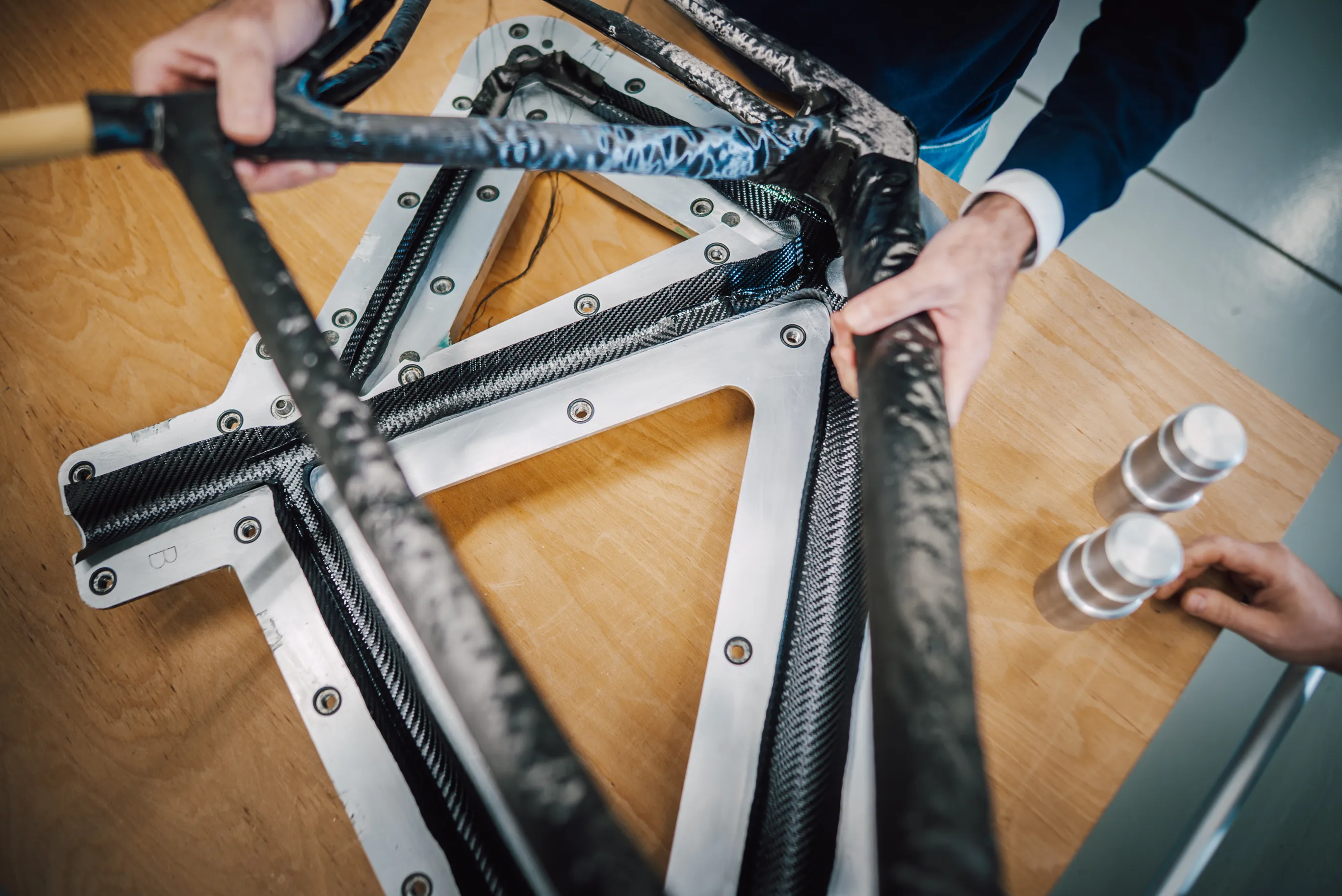
Every ply is placed into the mould by hand, in sequence, at 0°, 90°, +45° and −45°. This is the slow part, and the part that cannot be automated — the fibre has to follow the form rather than be forced onto it.
03
The frame is cured individually under six bar of autoclave pressure. It goes in as layers of carbon and comes out as one continuous shell — no bonding, no lugs, no glue.
04
Demoulded, prepared and painted by hand in the chosen finish — clearcoat over raw carbon, a solid colour, or the dual-opacity Ghost that lets the weave read through from underneath.
05
Every frame is measured against the drawing before it leaves. Geometric tolerances are held within 0.1mm, and the build is checked against the specification it was ordered to.
We obsess over the layup because feel does not happen by accident. When the structure is one continuous shell, you can shape how it breathes under load. That is the perfect ride.
Stefano Cenere
Founder & Master Craftsman
In the Workshop
SWI designs and hand-builds its framesets in Villafranca Padovana, in a region with centuries of artisan tradition — marble, stone, gold, and more recently advanced carbon composites. The carbon technology is Swiss. The hands are Italian.
01 / 03 · Working the frame in the jig
02 / 03 · Out of the mould, one shell
03 / 03 · The finished build
Craft Principles
No bonded joints anywhere in the structure. If it cannot be formed in one piece, we do not build it that way.
The layup is specified per person, not per size. Two riders on the same frame receive structurally different bicycles.
Every ply placed, every frame cured, every finish applied by hand in Villafranca Padovana. No outsourced assembly.
A strictly limited number of frames each year. Not scarcity as a tactic — it is simply how long the process takes.
SWI was founded in 2018 by Stefano Cenere, who came to carbon from a career shaping fine gold jewellery. The moulding techniques turned out to transfer.
As Featured In





Tell us a little about yourself. We reply personally within 24 hours — no automated replies.
Something went wrong. Please try again.
Your details are kept private and never shared with third parties.
Your message is with the team in Italy and a confirmation is on its way to your inbox. We reply personally within 24 hours.