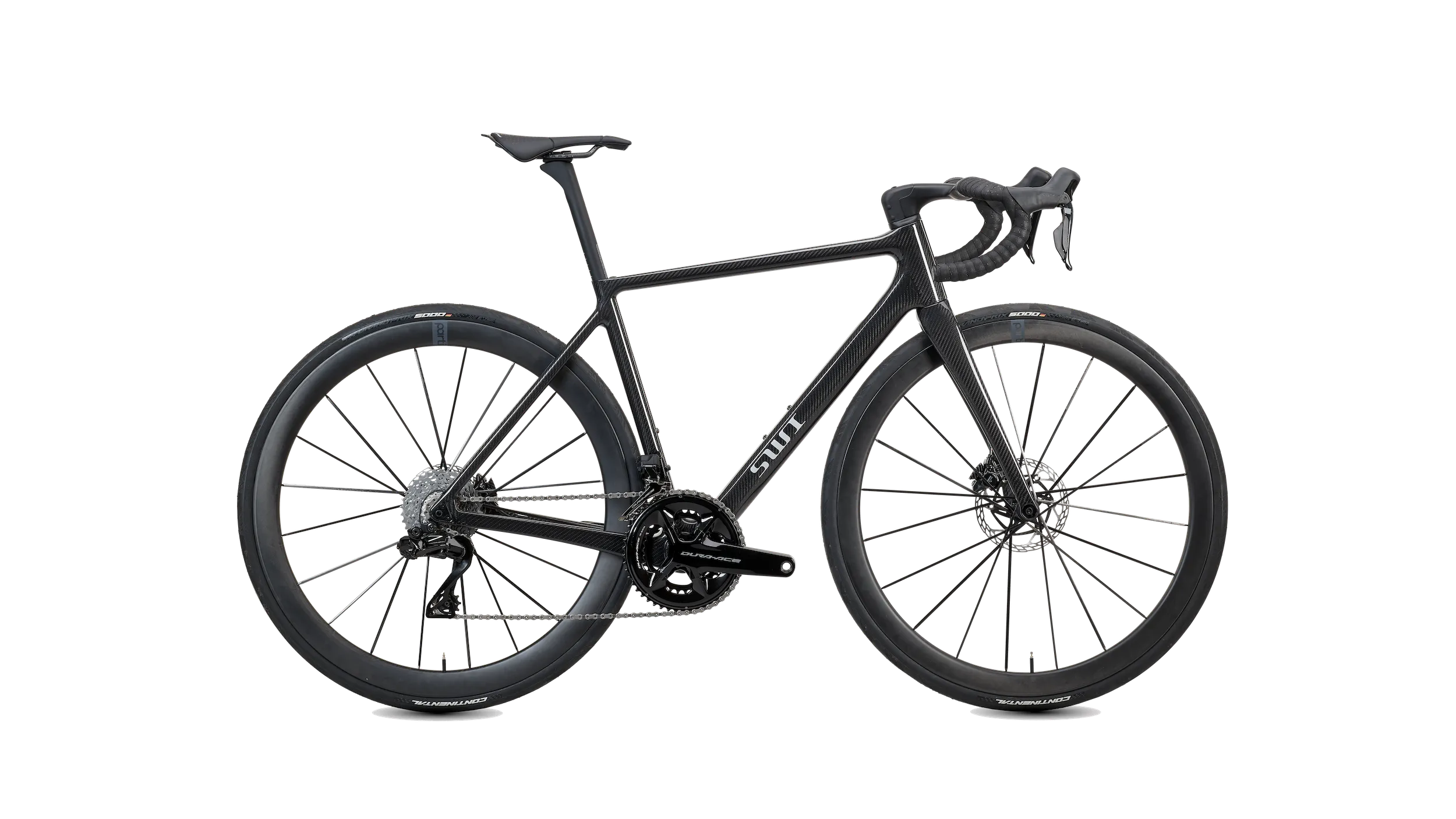
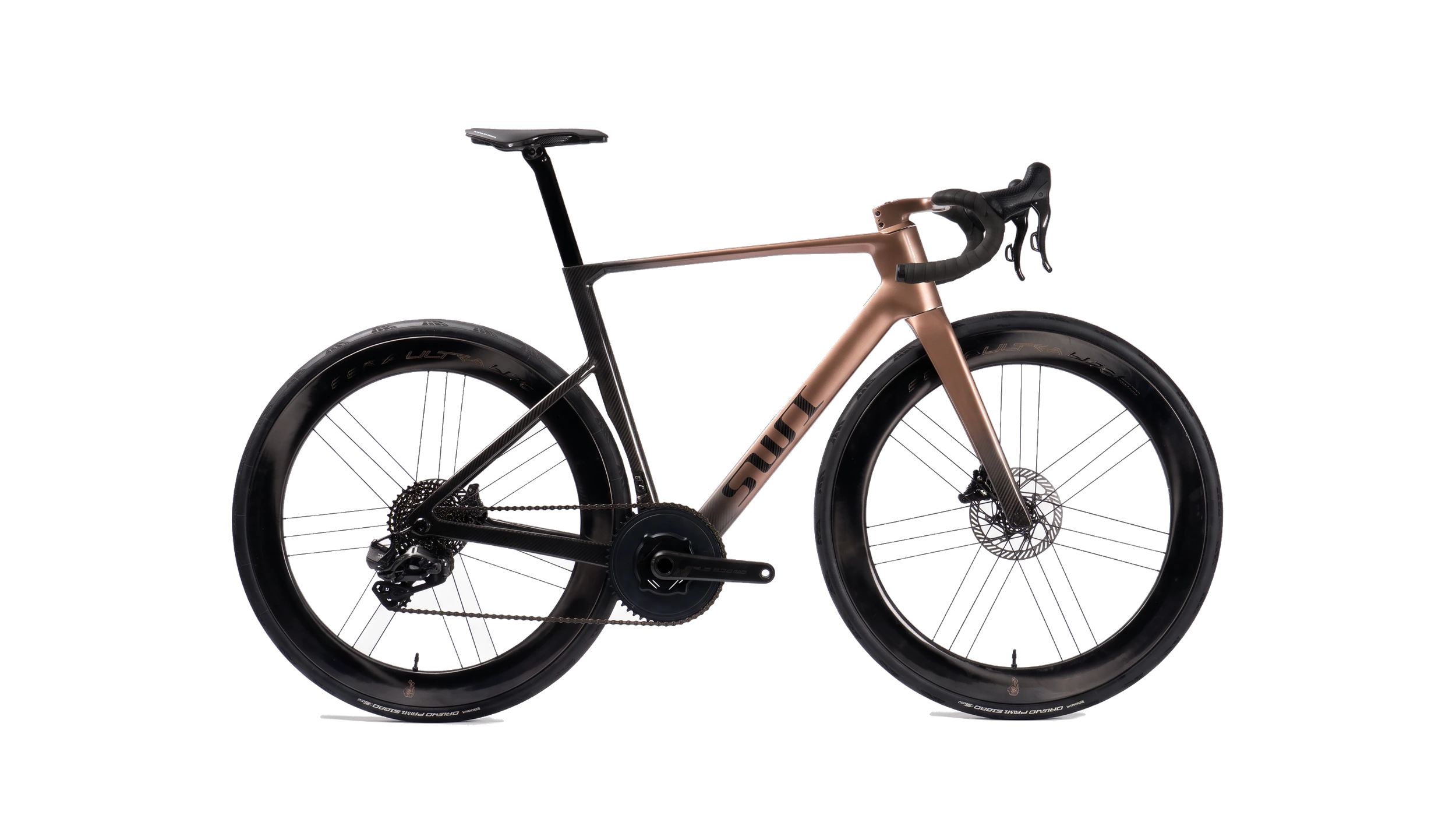


Click the image to magnify
Monocoque & Carbon
Where the frames are made, what a true monocoque is, and why it costs what it does.
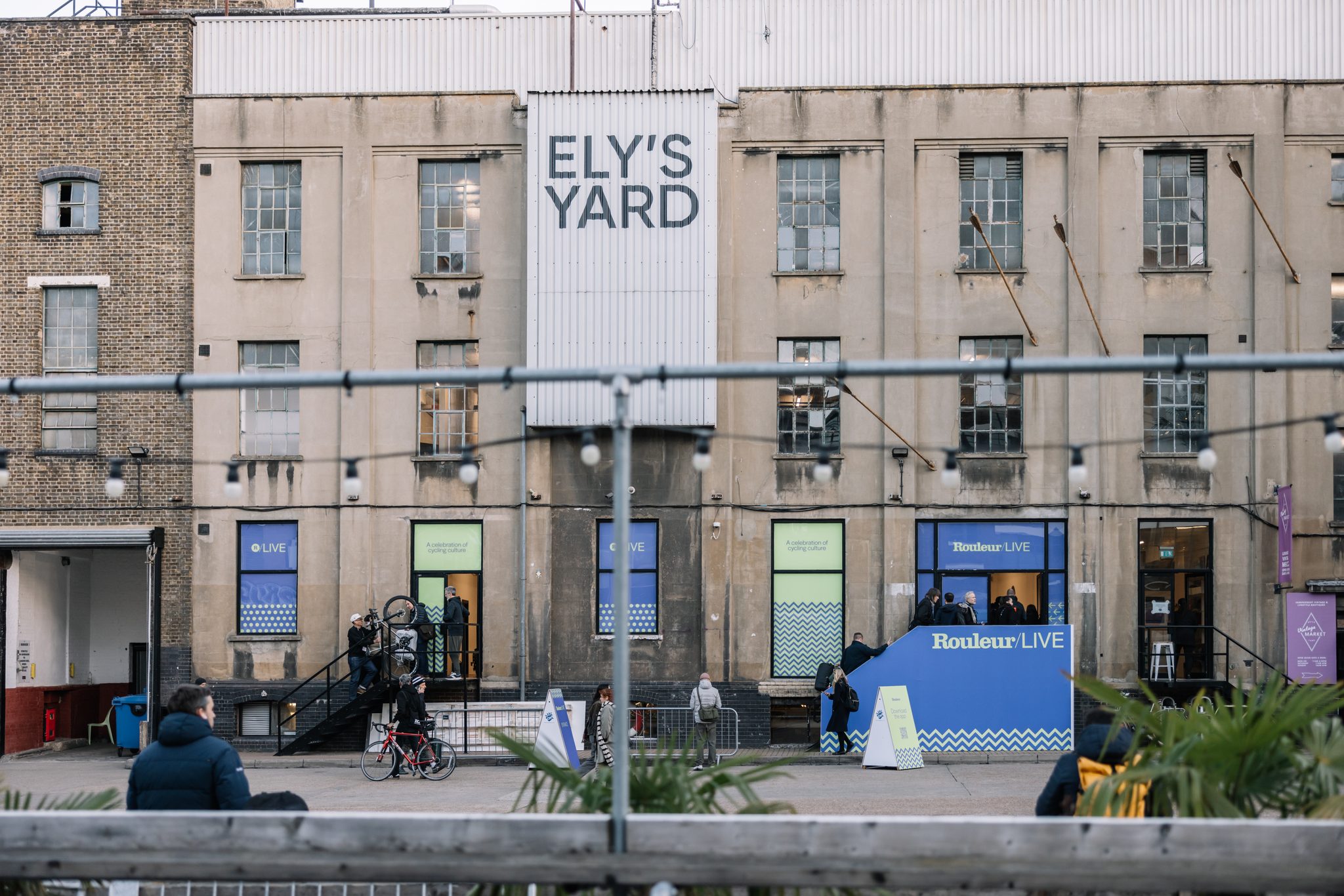
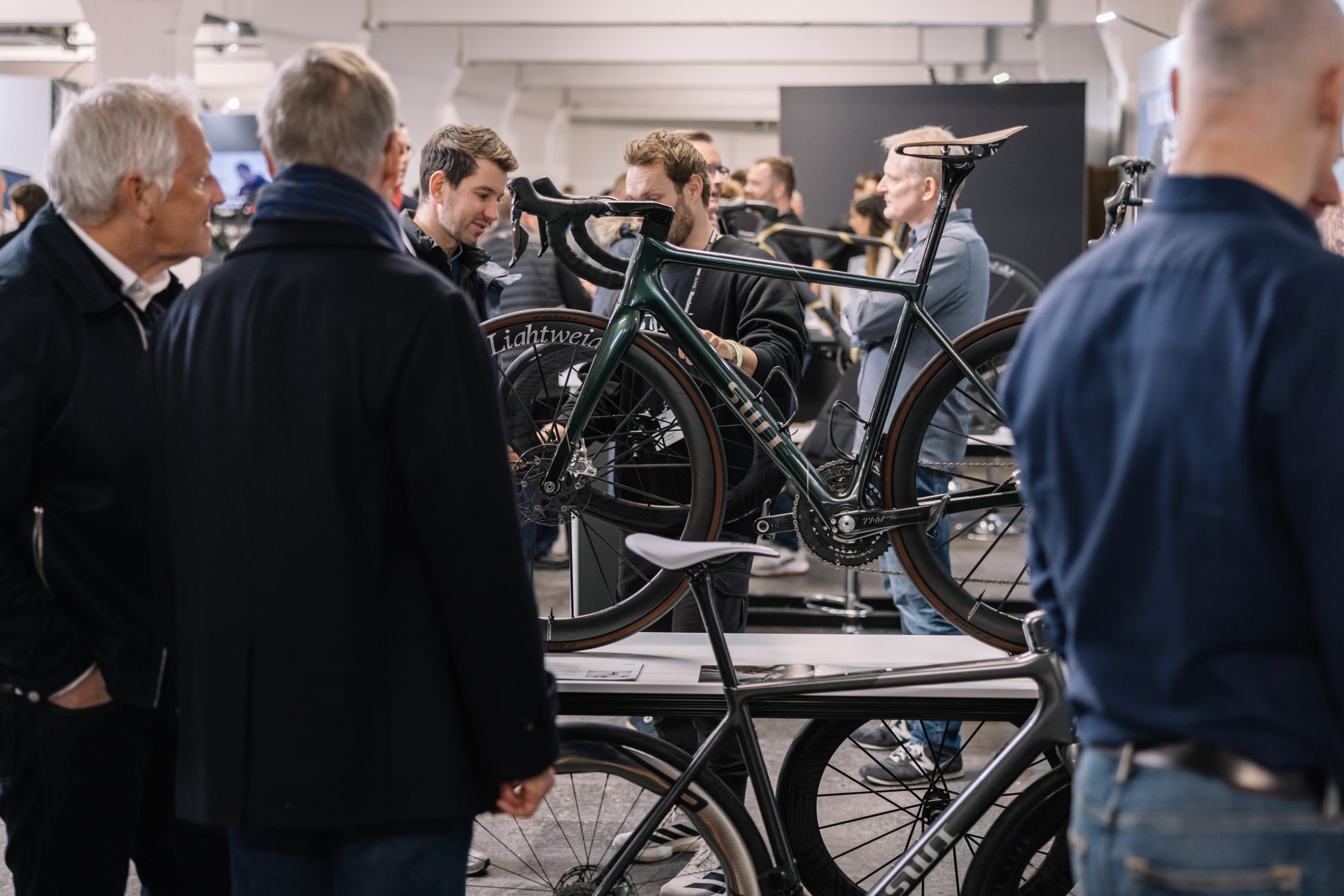
At Rouleur Live we stood beside the AER and the Aequus and answered questions. Most people came over for the new bike. What they asked about, again and again, was the company behind it.
The same ten questions came up more than any others. At this price, people want to know exactly who made the thing and where. That seems right to us, so here are the answers in full.
SWI is the work of Stefano Cenere, who spent his career as a goldsmith making luxury jewellery. He began prototyping in carbon in 2014, applying the moulding techniques of fine goldsmithing to composite, and established SWI in 2018 with his first frame.
We are a small team. That is deliberate: every frame is laid up by hand, cured on its own and finished by one craftsman, so the number we build each year is limited by people, not machines.
Yes, all of it that matters. Every frame is laid up, cured, sanded, painted and finished in our workshop in Villafranca Padovana, in the Veneto. The aluminium moulds are machined to our drawings by a specialist toolmaker an hour away, also in the Veneto.
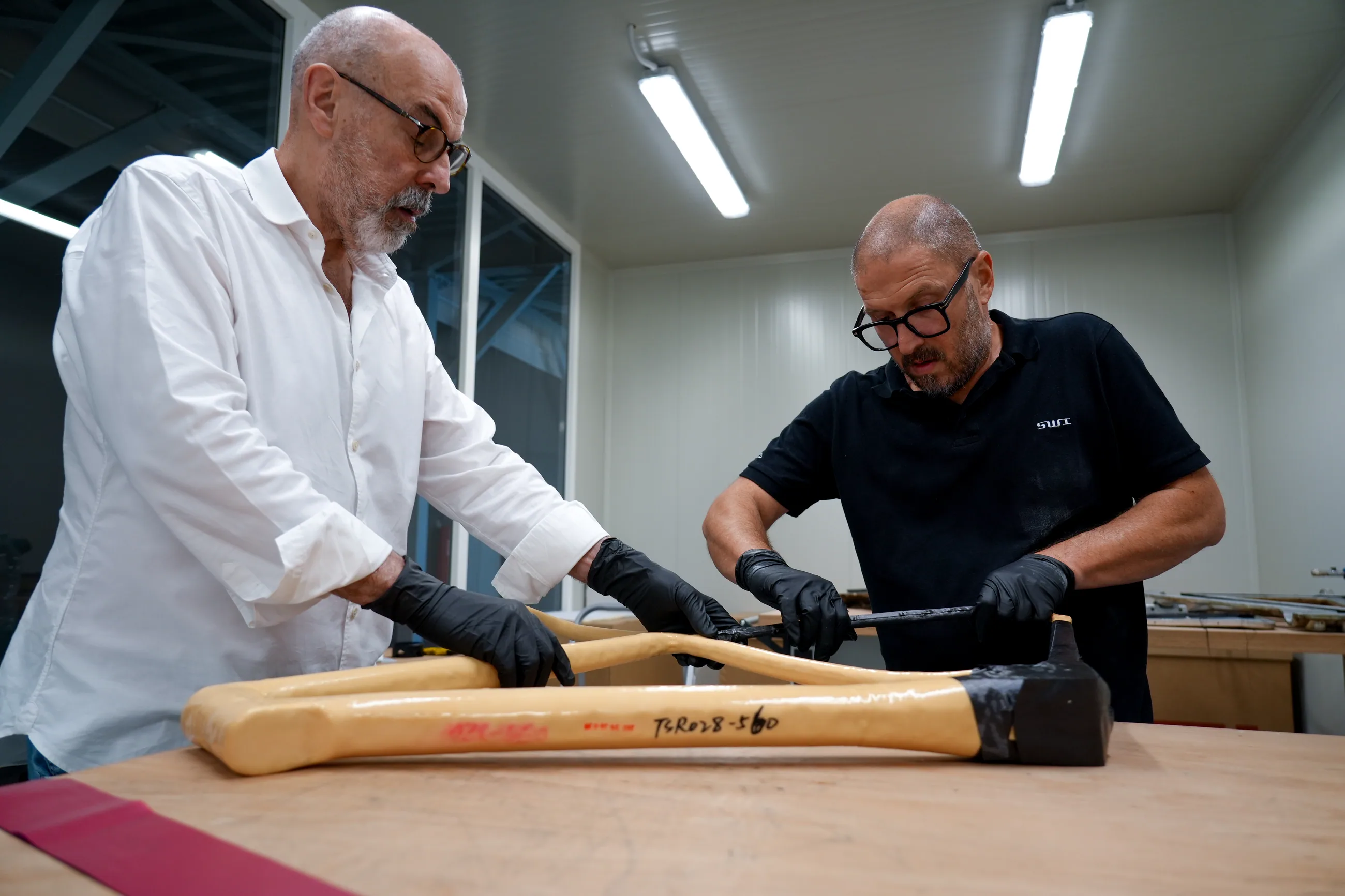
The one thing that does not start in Italy is the carbon itself. TPT™ was developed by North Thin Ply Technology in Switzerland, and we hold the worldwide exclusive for it in cycling.
We get this often, and the name does not help. The answer is that SWI is an Italian company. SWI Europe S.r.l. is registered in Italy and the bikes are made in Villafranca Padovana, in the province of Padua.
The Swiss part is real but small: our parent company, Xence S.A., is in Lugano, a few of the team work from Switzerland, and the carbon technology is Swiss. The design, the hands and the workshop are Italian.
Villafranca is about 45 minutes from Bassano del Grappa, at the foot of Monte Grappa. That is where we host owners when they collect their bike in person and ride it for the first time in the hills around Monte Grappa.
Yes. A monocoque frame is one structure: a single carbon shell with no separate tubes inside it. Every SWI frame is formed as one uninterrupted shell in one mould, with no bonded joints, no lugs and no tubes joined together.
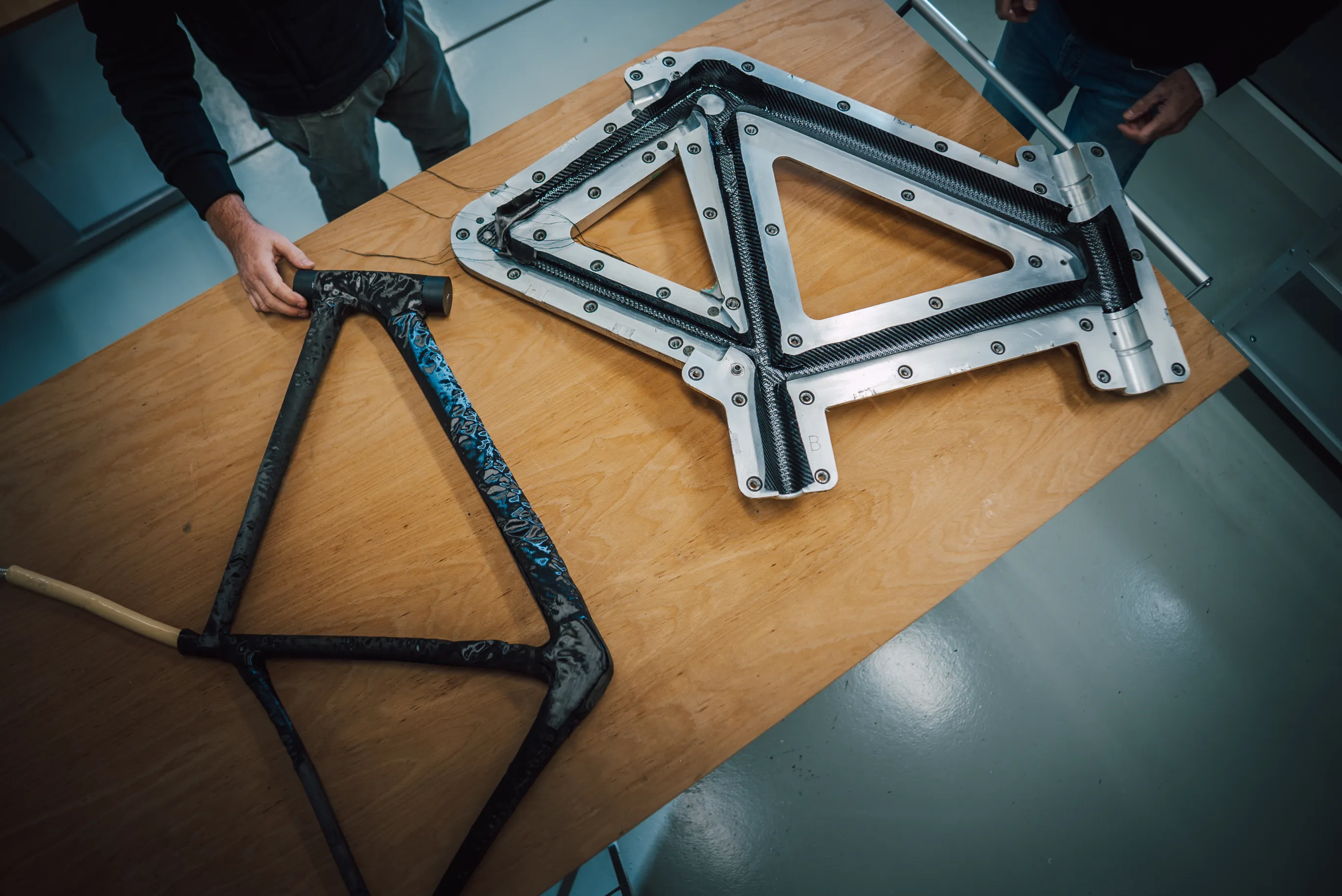
The word gets stretched. Many frames sold as monocoque are moulded in sections, front triangle in one piece and rear in others, then bonded together. That is a perfectly good way to build a bike, but it is not one shell.
We would rather show than tell. Carbon Bike Repair cut one of our frames open on camera to check the construction for themselves, and the film is on our technology page.
It does, and it is easier to feel than to describe. With no joints to interrupt it, energy and vibration travel through one continuous structure rather than across bonded junctions.
The way we put it at the stand: the bike feels of a piece. How stiff or how forgiving that piece is comes down to the carbon layup, which is the part we can tune.
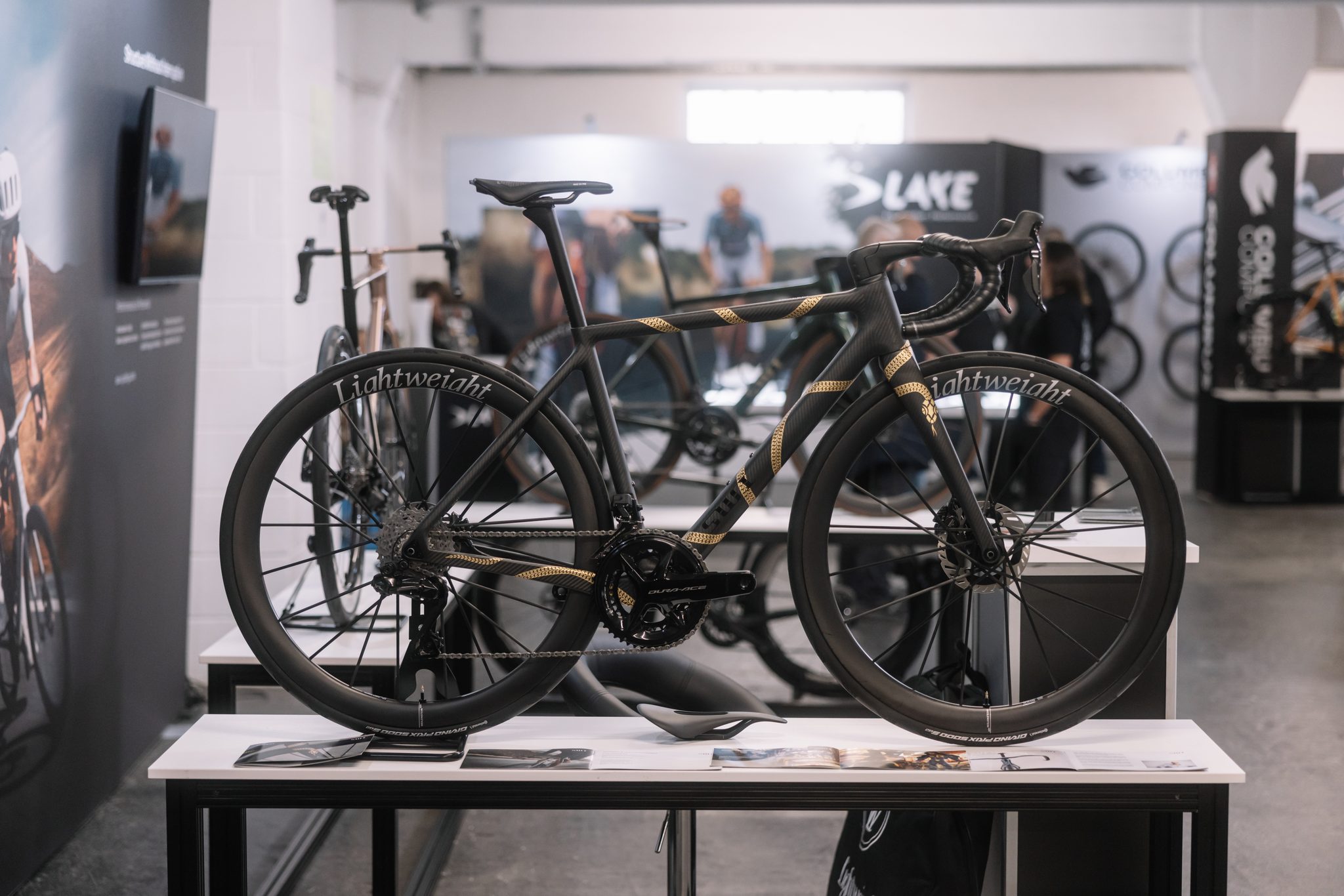
Back in January, we partnered with Tom Hnida from Chroma Studios in Prague to design a specific frame that represented the history of the brand. With Stefano Cenere being a jeweler and working with gold, we decided to do a 24-karat gold serpent wrapped around a matte SWI Aequus frame. This actually is the same bike that we took to Japan and premiered at Tokyo Fashion Week in collaboration with Mexican fashion designer Eduardo Ramos.
The layup is the recipe of carbon plies inside the shell: how many, which direction, and where. It decides how stiff the frame is, how much it weighs and how it rides.
We build with TPT™ thin ply carbon, with plies as fine as 30 microns, about fourteen layers to the millimetre where standard carbon fibre has about five. Thinner plies mean we can build stiffness from many layers placed exactly where the load is, rather than a few heavy ones. The result is a frame that is lighter and stiffer for the same strength.
The Aequus comes in two laminations at the same price. Both are TPT™ inside. The standard lamination finishes with a 3K herringbone woven outer layer, which you can see under a clear coat. The Leve lamination uses unidirectional TPT™ on the outside too, which saves about 90 grams. See the two side by side.
For riders who want to go further, a rider-specific layup varies the number of plies across twelve zones of the frame, set from your weight, your power and the ride feel you want. As far as we know, no other builder varies the laminate per rider in a full monocoque.
An Aequus frame weighs 720 to 790 grams in the standard lamination and 640 to 710 grams in the Leve lamination, depending on size and layup. Our own custom-designed cockpit for the Aequus weighs just 320 g (400 x 100 mm), and our fork weighs 390 g.
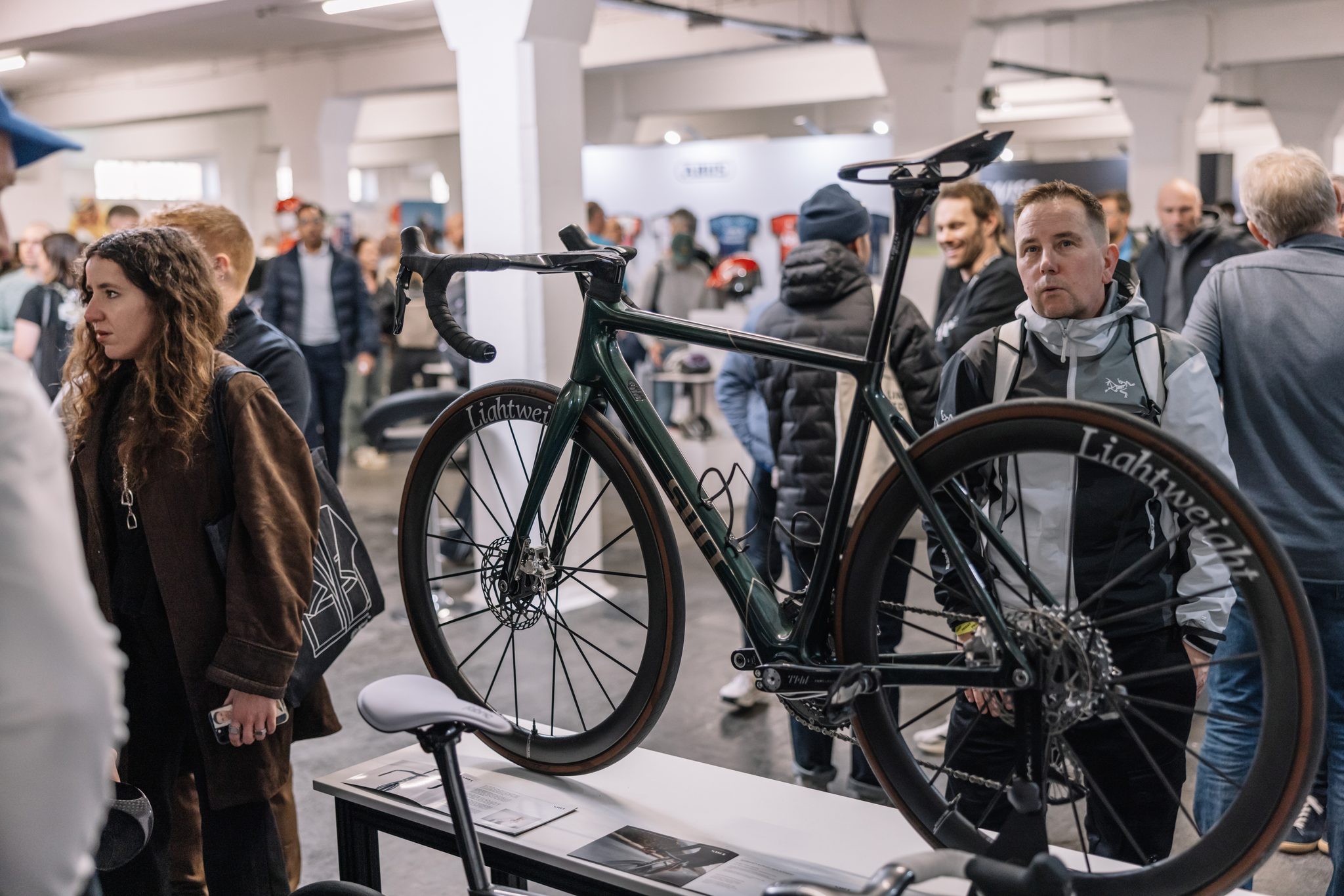
The honest answer is that a frame can be made almost as light as you like. The question is what you give up. We set the layup for stiffness, ride feel and a frame that will last, and then take weight out where it does not cost any of those. It is also why our warranty runs for fifty years. The Dreambuild bike we had on display at the stand weighed 6.1 kg.
Most frames in the standard layup are ready between 21 and 40 days after the order is confirmed. A rider-specific layup takes longer, because the laminate is engineered for you before a ply is cut.
Many custom builders quote several months. We can be quicker for two reasons. First, everything after the mould happens under one roof in Villafranca: layup, curing, sanding, paint and finishing, so a frame never waits in someone else's queue. Second, we build in seven fixed sizes, 48 to 60, from moulds we already own. Nobody has to machine a new tool before your frame can start. Fit is then dialled in with the cockpit and seatpost.
This was the conversation we enjoyed most, because the answer is four plain things.
An Aequus frameset is €6,990 in either lamination, including VAT, with all fourteen paint finishes included. A rider-specific layup is €8,990, and complete builds start from €13,390.
Italy has some wonderful frame builders, and people at the stand named several. Our answer comes down to four things that work together.
Together they decide how the bike rides. The geometry keeps it settled and planted on a fast descent. On a climb the one-piece shell makes it feel direct and quick to respond, with nothing between your effort and the road but carbon.
The AER adds one more thing. In the wind tunnel its drag stayed far more consistent as the wind swung round to the side than the Aequus, which surprised us, because the Aequus does not look like a frame the wind would bother. The AER article has the details and what those early figures do and do not mean.
If you missed us at Rouleur Live, the conversations do not have to wait for next year. Every build includes collection at the factory and four days riding in the Veneto, and you can build your SWI with live pricing today.
And if you came over for the new bike, read the AER story.
Rouleur Live photograph by Rob Perry.
Build yours
Every SWI frame is formed as a single uninterrupted carbon shell and laid up for one rider's weight, power and preferred ride feel. Framesets from €6,990.
More from the Journal
Monocoque & Carbon
Where the frames are made, what a true monocoque is, and why it costs what it does.
Read the storyrouleur-live-questions-answered
Monocoque & Carbon
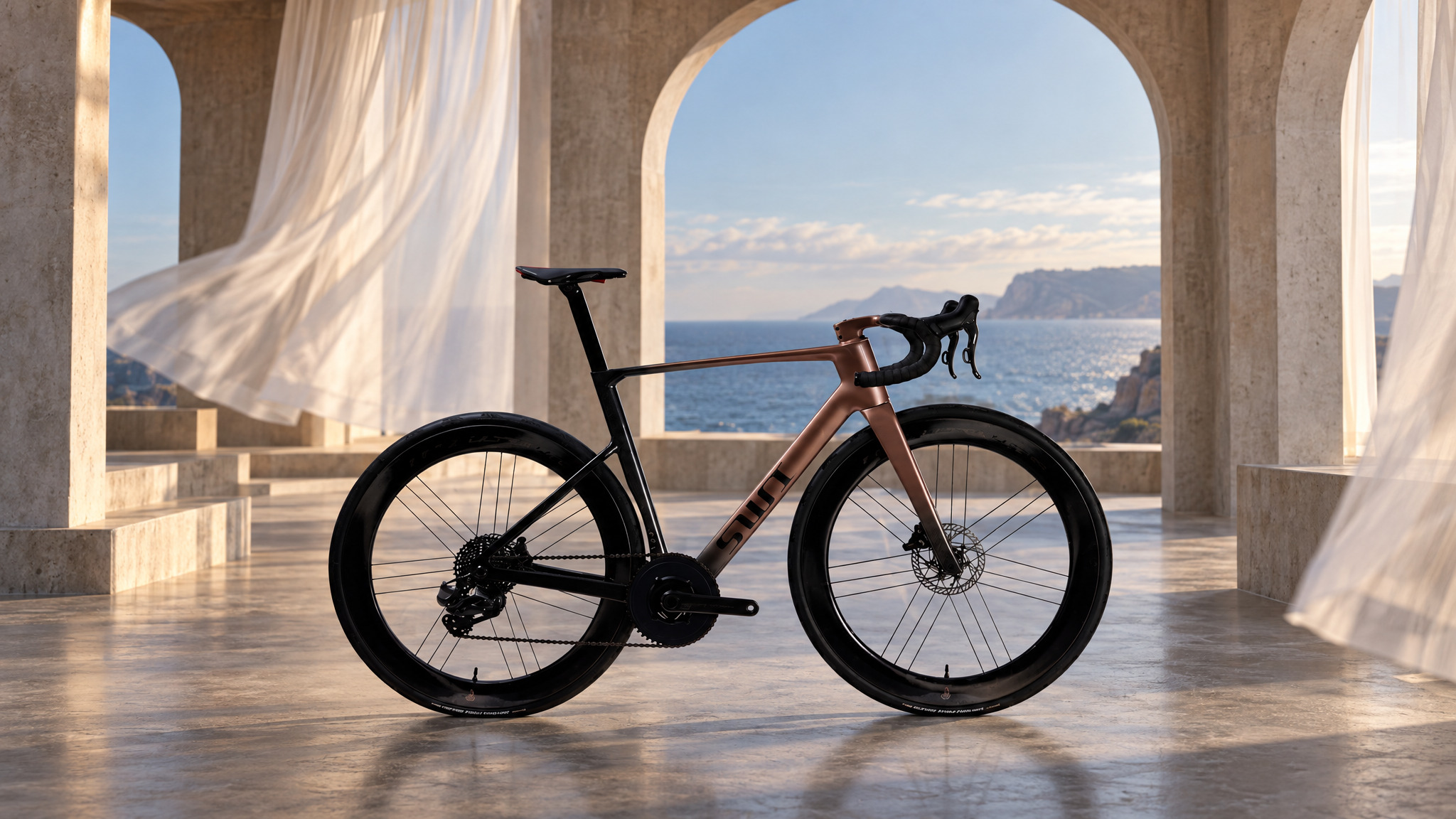
The AER made its first public appearance at Rouleur Live. It arrived as a moulded frame rather than a render, with a 30-bike Campagnolo edition alongside it.
Read the storyswi-aer-monocoque-aero-road-bike
Custom Builds
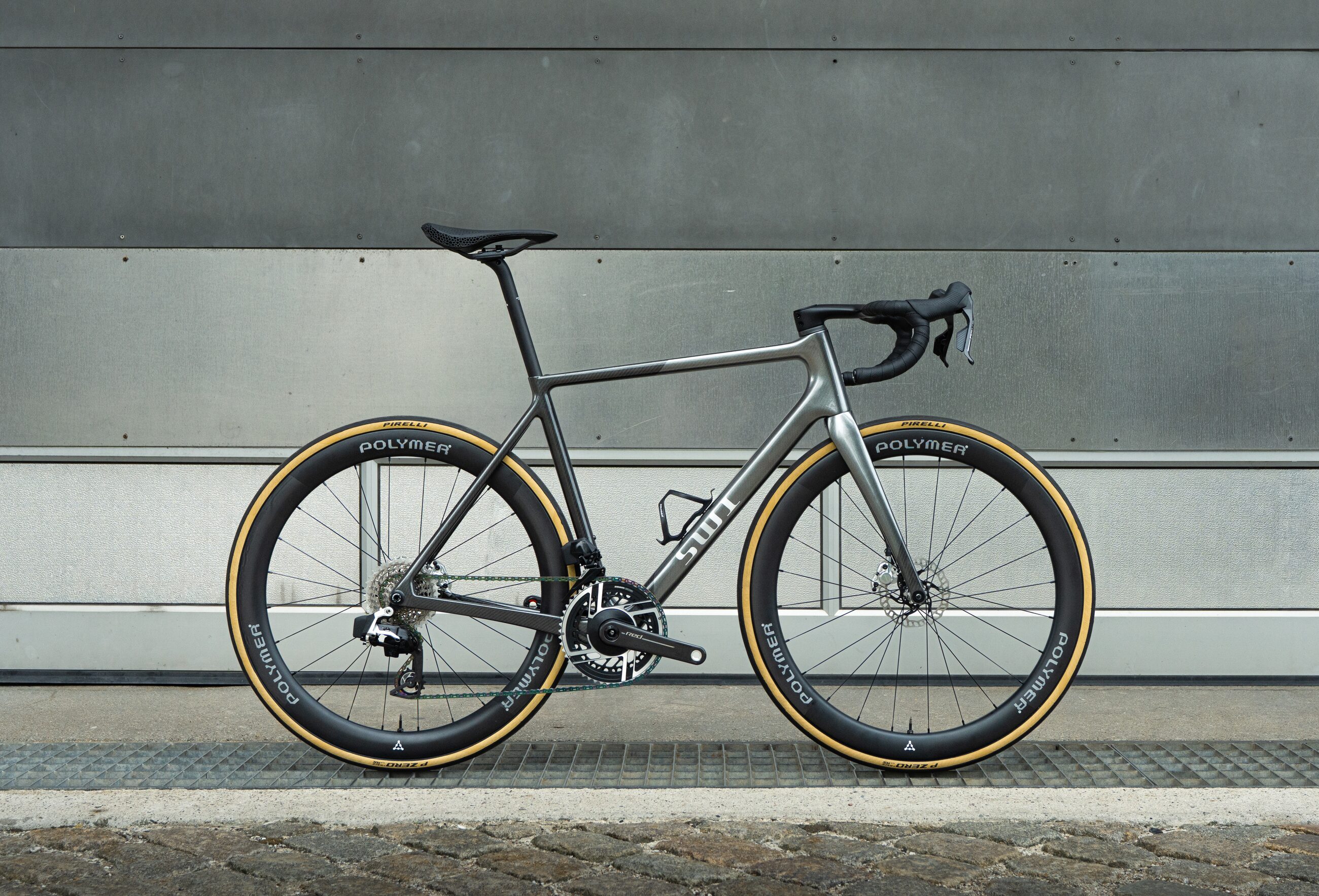
The component studio behind the Rover bar and the Obelisk post built an Aequus around their own parts, then photographed it as an object. It is the clearest look yet at what a continuous carbon shell does to a bicycle's lines.
Read the storypolymer-workshop-machine-portrait-aequus
Custom Builds
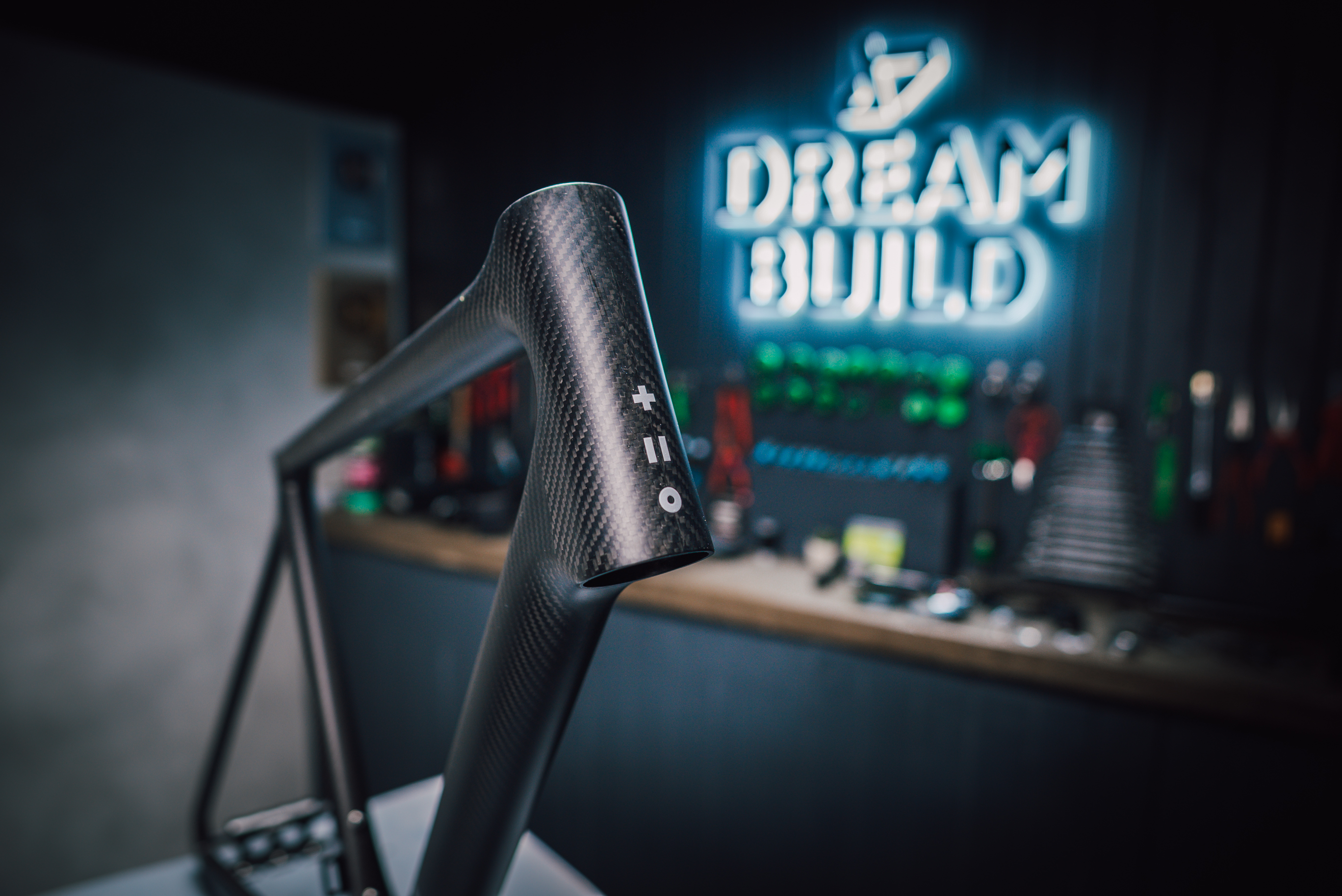
Rosedale Chimney Bank is a 1.3km wall that spikes to 30%. This is the build story behind the Leve that took its segment record.
Read the storybuilding-andrew-feather-s-swi-leve-hill-climb-bike

Italian Craft
A builder who has filmed hundreds of frames walks into the SWI workshop, and says what most brands would rather he did not.
Read the storydream-build-on-swi

Italian Craft
How a 24-karat gold Serpent became more than a showpiece, and what happens when performance engineering starts speaking the language of art.
Read the storyswi-at-tokyo-fashion-week
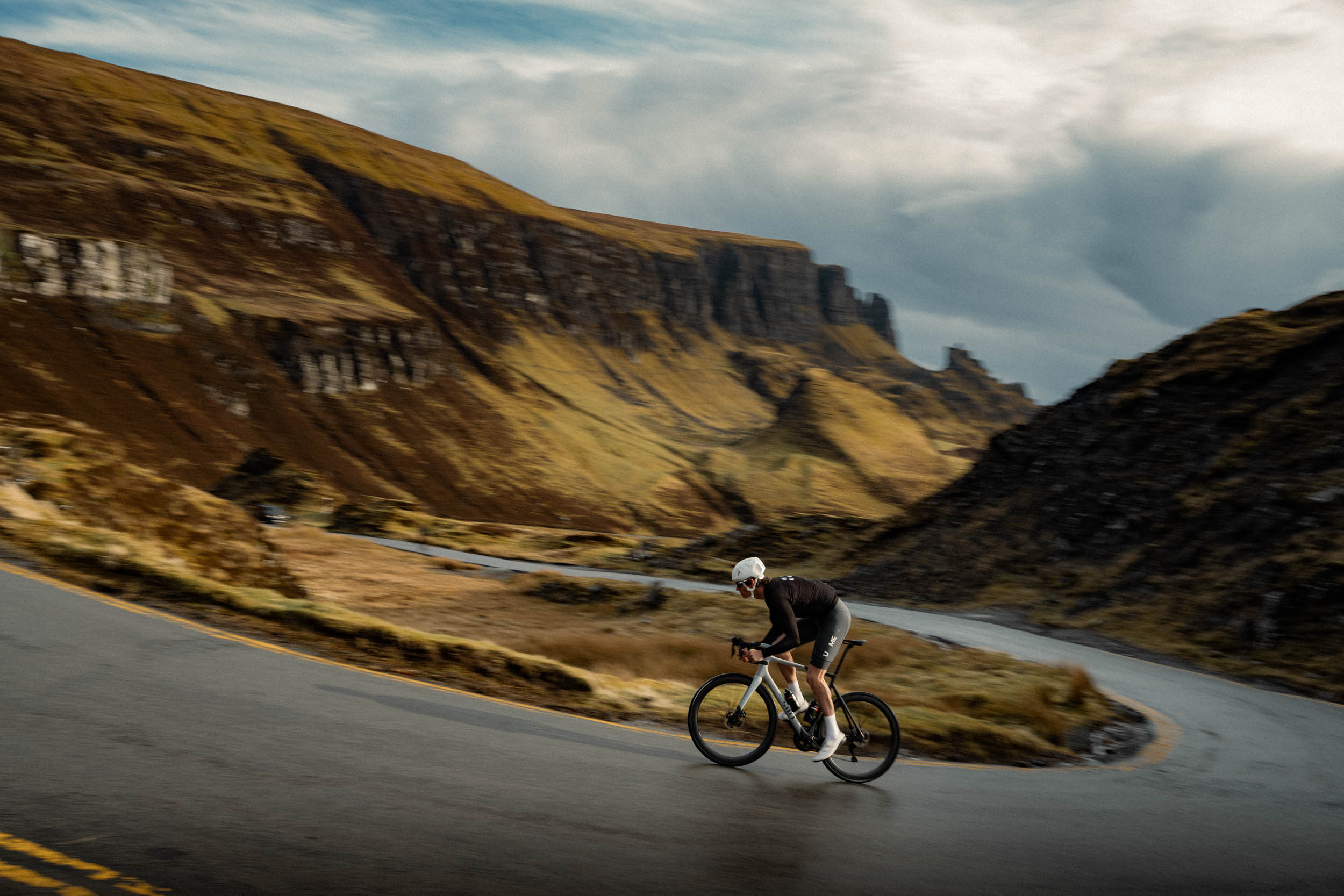
Riding & Routes
A growing UK audience, a world-class British photographer, and one of the most dramatic cycling landscapes on earth.
Read the storychasing-light-in-scotland-with-tom-kahler
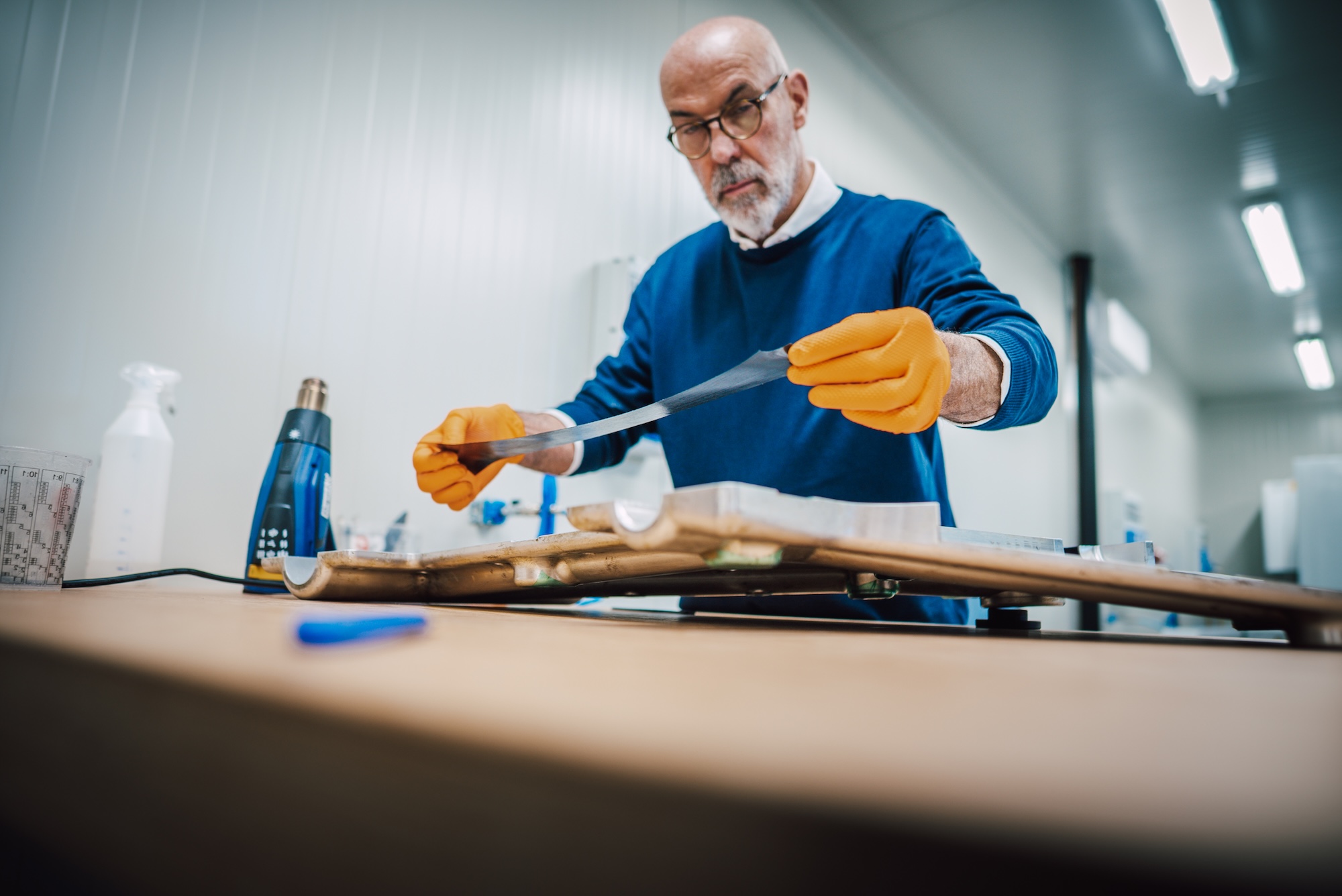
Monocoque & Carbon
If you have ever been told that monocoque is faster, you have probably also been left with the only question that matters: faster how, exactly?
Read the storythe-benefits-of-a-true-monocoque-frame
As Featured In



Tell us a little about yourself. We reply personally within 24 hours, with no automated replies.
Something went wrong. Please try again.
Your details are kept private and never shared with third parties.
Tell us a little about yourself. We reply personally within 24 hours, with no automated replies.